
Why Soundproofing Your Windows Is Needed For Adelaide Living

Soundproofing Your Windows

Why Soundproofing Your Windows Is Needed For Adelaide Living

You might think that as one of Australia’s ‘quieter’ cities it would mean that noise pollution isn’t a concern in Adelaide. However, a closer inspection reveals that excess noise is more of a problem for Adelaide residents than you think.

Adelaide experiences a considerable amount of noise for multiple reasons, each of which has been found to be a nuisance, affect sleep quality, and may even damage health in the long term. For Adelaide residents who experience loud noises during the night, this has become a significant problem that affects their sleep and wellbeing.

There are a number of solutions that can help protect your home from unwanted noise. It is important to investigate the type and source of noise to ensure you choose the appropriate solution for the most effective soundproofing.

What makes Adelaide so loud?

While Adelaide has a smaller population than larger cities like Sydney and Melbourne, Adelaide has the second-highest population density in the country, behind Melbourne and just narrowly taking 2nd place in front of Sydney. This has given rise to a number of community complaints and even legal disputes surrounding the noise of lawnmowers and barking dogs, in addition to rowdy parties in urban areas. This also means that large apartment complexes or and residential homes will be most severely affected by noise pollution, with sound traveling through windows of neighbouring properties.

Additionally, a number of suburbs such as Brooklyn park and West Richmond have been affected by increasing air traffic over the past few years, creating unacceptable disturbances for residents and forcing more stringent building guidelines to ensure new developments are more soundproof.

Why is excessive noise harmful?

While noise can be palmed off as a frustrating reality of living in certain areas, a number of studies have found this can also have harmful effects on our health. A range of mild conditions including stress, fatigue, poor concentration, and more serious illnesses such as cardiovascular disease, cognitive impairment, and hearing loss can all be caused by excessive noise.

It’s become such a problem that a 2011 study conducted by the World Health Organisation found that 1 million years of healthy life are lost each year in Europe due to the physical effects of excessive noise.

What can be done about it?

Luckily, there are a number of ways to reduce the impact that noise has on your home and your night’s sleep. Taking the appropriate steps to control how sound travels through your home is important, which include carpets or rugs on your floors, adding curtains to your living areas, filling bookshelves to act as a barrier for noise and rearranging your furniture to absorb noise from the walls. By far the most effective course of action you can take is soundproofing your window or door, which is typically the weakest building component. This can be done easily and effectively with a retrofit glazing system – which means the system fits into your existing windows and doorways.

How Magnetite can help?

Magnetite Adelaide offers a number of soundproofing solutions to fit your existing windows and doorways such as Magnetite and Soundtite. Magnetite is a magnetic secondary glazing system that attaches discreetly to the inside of a window reveal. Whereas Soundtite is a secondary aluminium system which comes with acoustic glass and seals, that can be fit to 6.38mm, 6.52mm or 10.38mm laminated glass depending on your needs.

Both Magnetite and Soundtite works by creating a large air gap to act as a barrier for noise, in a similar way that traditional double-glazed windows work. This secondary double-glazed window system is tested and proven to reduce noise up to 70% through the window.

Now that your windows are soundproofed, all that’s required on your part is that you sit back, rest and experience that ‘quiet’ part of Adelaide that everyone keeps talking about.

Get in contact with the team at Magnetite Adelaide today and learn more about our range of double-glazed windows.

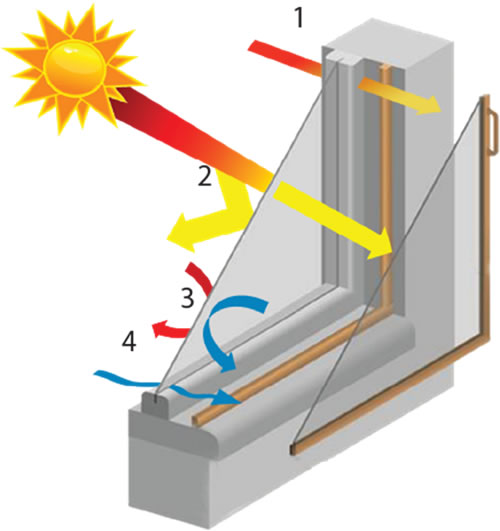
  1. Conduction
    Heat moving through an object (i.e. heat will travel through an aluminium, or steel frame more easily than through a timber or PVC frame).
  2. Radiant heat
    Heat from the direct sun. It can pass through space until reflected or absorbed.
  3. Convection
    Heat flow resulting from air movement e.g. either 'natural' convection - warm air rises, or 'forced' convection - a breeze by a window, both can result in a draught by a window.
  4. Infiltration
    Air leaks around the frame, around the window sash and through the gaps in the movable window parts.

When evaluating your options to improve the thermal performance of your windows, the following double glazing key performance criteria should be considered:

  • U-Value (Uw) represents heat transfer through a window, irrespective of direct sunlight. The lower a window’s U-Value, the better the insulation performance.
  • Solar Heat Gain Coefficient (SHGC) measures the solar energy that passes through glazing. The lower the SHGC, the less solar heat is transmitted through a window.
  • Air Infiltration or leakage measures the rate at which air passes through gaps in window joins and seals. The lower the air infiltration, the better a window’s energy performance.

The Window Energy Rating Scheme (WERS) Thermal Performance

Aluminium Frame Windows

Glazing Type Cooling Stars Heating Stars Cool% Heat% Uw SHGC
Single glazed 3mm clear glass* half blue star red starhalf red star 7.4 0.77
Single glazed 3mm clear glass &
4.5mm Magnetite
blue starblue starhalf blue star red starred starred starred starred starhalf red star 35% 59% 2.9 0.67

Timber Frame Windows

Glazing Type Cooling Stars Heating Stars Cool% Heat% Uw SHGC
Single glazed 3mm clear glass* blue starhalf blue star red starred starred starhalf red star 20% 28% 5.5 0.69
Single glazed 3mm clear glass &
4.5mm Magnetite
blue starblue starhalf blue star red starred starred starred starred starred star 37% 61% 2.6 0.66
Single glazed 3mm clear glass with
Solartite** and 4.5mm Magnetite
blue starblue starblue starblue starblue starblue starhalf blue star red starred starred starred starhalf red star 76% 45% 1.8 0.20


*WERS standard typical industry window
**Solartite is a range of high performance window film. The window tested above has Solartite’s low-e film.


Magnetite vs Traditional Double Glazing – What the experts says

Winter - the ideal situation is to let in as much of the sun's heat and then trap it inside to maintain a comfortable environment in your home or office. This will also significantly reduce heating costs and saves you money. The ideal window for winter will have a high SHGC to let the sun's heat in and a low U-Value to prevent the heat from escaping. Clear windows without shading films are better suited for winter climates.

Compared with traditional double-glazing, Magnetite’s double-glazing solution can provide better results during winter or for cold climate areas such as Canberra, the Adelaide Hills and Blue Mountains.

Magnetite's clear acrylic window panels allow the direct heat from the sun's rays to enter the building and once inside, Magnetite's superior magnetic seals retain the heat, giving Magnetite an advantage over conventional operating windows.

Glazing Type Cooling Stars Heating Stars Cool% Heat% Uw SHGC AI
Double Glazed 3mm clear glass/12mm air
gap/3mm clear glass IGU (Insulated Glass Unit)*
blue starblue starhalf blue star red starred starred starred starred starhalf red star 40% 55% 3.0 0.61 5.0
Single glazed 3mm clear glass &
4.5mm Magnetite
blue starblue starhalf blue star red starred starred starred starred starred star 37% 61% 2.6 0.66 0.5


*WERS standard typical industry window

Summer - the ideal situation is to minimize the heat coming in from outside and prevent the cool air inside from escaping through the window. This will make your home more comfortable and reduce your air-conditioning costs. The ideal window for summer, or for a large west-facing window, will have a low SHGC to limit the heat from the sun's direct rays, as well as, a low U-Value to prevent the heat in the air outside from moving through the window and warming the cool conditioned air inside. It is better to have a shading film on the first (outer) glass pane to limit the heat that enters the double glazed unit.

The combination of Magnetite retrofit double glazing and Solartite outperforms the traditional insulated glass unit for hot climate. Magnetite fit over an existing window with reflective film will give better summer heat control than a double-glazed window with supertoned glass.

The Magnetite system stops the conduction and convection of heat better than glass windows giving superior results for summer conditions. Combined with a film or a shading device, Magnetite is the ideal solution for the hot Australian conditions.

Glazing Type Cooling Stars Heating Stars Cool% Heat% Uw SHGC AI
Double Glazed 5mm Supertoned glass/6mm
air gap/5mm clear glass IGU (Insulated Glass Unit)*
blue starblue starblue starhalf blue star red starred starred starred starhalf red star 54% 425% 3.30 0.461 5.0
Single glazed 3mm glass Solartite**
and 4.5mm Magnetite
blue starblue starblue starblue starblue starhalf blue star red starred starred starred star 73% 38% 2.4 0.19 0.5


*WERS standard typical industry window
**Solartite is a range of high performance window film. The window tested above has Solartite’s low-e film.

Click here to view pdf version of Magnetite WERS test result.

Noise Reduction Technical Data and Results

Proven Results

Noise pollution is one the biggest problems faced in the cities today, particularly in a high-density living. Unwanted noise can be responsible for sleep loss and lack of concentration. This can lead to a deterioration of health through increased stress levels, headaches, high blood pressure and loss of hearing.

Noise penetrates windows through leaky seals or vibrations through the window structure. To reduce noise, a window should minimise air infiltration, hold enough weight to limit vibration and allow a large air cavity. This cavity, or air gap, is the key to secondary glazing.

Expert Advice:

CSIRO Research by John Davy shown an air cavity can effectively enhance sound insulation performance. The larger the air cavity the more noise the window system can reduce. Results show a wide air gap of 100-125mm will improve sound insulation by an average of 7dB(A) more than windows with a narrow gap of 8-13mm.

Window or Glass Door Type Total Glass Thickness (mm) Air Cavity Thickness (mm) Sound Insulation (dB)
Single Glaze 3mm 3 0 23
Single Glaze 6mm 6 0 27
Double Glaze Narrow Gap 9-12 8-13 31
Double Glaze Wide Gap 9-12 100-125 38


The human ear is less sensitive to low frequency sound. According to a study released by the CSIRO, the human ear needs a change of 3dB to detect a difference in noise levels and the human ear perceives a change of 10dB as a doubling or halving of the noise level.

If you double the thickness of glass in a window the noise level will decrease by 3dB the least amount possible to make a difference. If the glass is laminated there is no perceived difference in noise reduction.

National Acoustic Laboratory Testing:

Working with the principles of noise transfer, Magnetite® and Soundtite are designed for high performance, which is achieved by combining air tight seals with the ability to maximize an air cavity and the flexibility to vary glazing thickness to suit. Magnetite® is excellent at reducing general noise such as busy roads, commuter trains and noisy neighbours. Whereas, Soundtite works well to combat low frequencies noise such as garbage truck, freight trains or airplane during take-off and landing.

Test Code Material Tested Rw* Improvement
ATF 707 (test window) Aluminium sliding window, 3mm float glass with mohair seals 23 N/A
ATF 709 Test window, 100mm air gap and Magnetite System (4.5mm acrylic panel) 35 52%
ATF 1507 Test window, 100mm air gap and Magnetite System (10.0mm acrylic panel) 39 70%
ATF 817 Test window, 100mm air gap and Soundtite (6.38mm laminated glass) 41 78%


*The Weighted Sound Reduction Index (Rw) is a measure for sound insulation performance of a single building element such as windows. The higher the Rw rating, the better the sound insulation.