Magnetite’s Ultimate Guide to Double-Glazed Windows

Double-Glazed Windows

Magnetite’s Ultimate Guide to Double-Glazed Windows

When it comes to keeping your home thermally comfortable while staying inside, windows play an important role. No matter what time of the year it is, it’s important to make sure your home is well insulated, so that you can keep your family comfortable, while also saving on your power bills.

While this advice is all well and good to hear, we know some of you might not be convinced that investing in insulation or replacing your windows is a money well spent. When you begin to investigate all different types of window insulation, and weigh up the cost and benefits, you may easily find the reason for not investing adds up quickly.

It’s been estimated that up to 40% of heat is lost through household windows, prompting many Australians to make the switch towards double-glazed windows.  For those without proper insulation, energy bills have become a real issue particularly residents of Canberra, who pay the highest power bills of any state in the country.

To help you make the switch to retrofit double-glazed windows, we’ve created the ultimate guide to help you get more acquainted with them.

How much do you pay for power?

According to recent estimates from the Australian Energy Market Commission (AEMC), the average power bills paid quarterly across each state are:

State Cost
Victoria $1,132
NSW $1,292
South-East QLD $1,334
SA $1,884
ACT $1,967

With ACT residents paying so much on their power bills, ensuring your home is energy efficient is an important part of reducing costs.

What are double-glazed windows and how do they work?

Double-glazed windows are an insulated glass unit that combines two panes of glass into a single-window system. The panes of glass in double-glazed windows are separated by a sealed air gap or sometimes filled with argon gas. This sealed air gap acts as a thermal barrier that keeps the heat in as opposed to standard single glazed windows that don’t have this barrier and leak heat out.  Retrofit double-glazing is the addition of a second glazing layer to the inside of the existing single glazed window effectively turning your window into a double glazed window.

What benefits do retrofit double glazed windows provide?

Double-glazed windows are a great insulator, meaning that they keep the cold air out in the winter and keep the scorching heat away from your home in the summer. Estimates suggest that the insulation and ability to hold the desired temperature of a room can be increased by up to 70% following the installation of retrofit double-glazed windows, meaning you will spend less money on heating or cooling appliances.

Installing retrofit double glazing also reduces noise, which helps you get a good night’s sleep during the howling winds of winter or the chirp of cicadas during the summer.

How much do you save with retrofit double-glazed windows?

While it varies from how much you spend on your power bill at the moment, double-glazed windows are projected to save the average Australian between $200 to $300 per year on their electricity costs. When you account for energy prices in Canberra, that number starts to look a lot larger, meaning the windows quickly pay themselves off. By retrofitting existing windows with double glazing, you take these savings even further because the process doesn’t require any structural changes and requires less time to install. It fits into your existing windows or doors. Retrofit double glazing allows you to enjoy all the benefits of double glazing without the hassle or cost of replacement windows.

Apart from saving money, the most important thing double-glazed windows provide is insulation and comfort for your family and protecting your home year-round.

Improve the thermal comfort and insulation of your home today, get in contact with our team at Magnetite Canberra and discover our range of double glazing solutions for your existing windows or door.

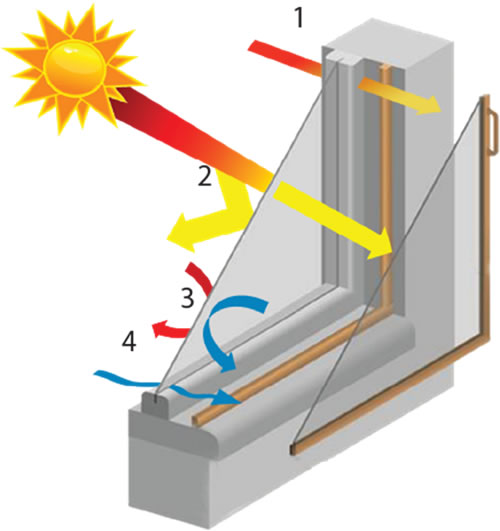
  1. Conduction
    Heat moving through an object (i.e. heat will travel through an aluminium, or steel frame more easily than through a timber or PVC frame).
  2. Radiant heat
    Heat from the direct sun. It can pass through space until reflected or absorbed.
  3. Convection
    Heat flow resulting from air movement e.g. either 'natural' convection - warm air rises, or 'forced' convection - a breeze by a window, both can result in a draught by a window.
  4. Infiltration
    Air leaks around the frame, around the window sash and through the gaps in the movable window parts.

When evaluating your options to improve the thermal performance of your windows, the following double glazing key performance criteria should be considered:

  • U-Value (Uw) represents heat transfer through a window, irrespective of direct sunlight. The lower a window’s U-Value, the better the insulation performance.
  • Solar Heat Gain Coefficient (SHGC) measures the solar energy that passes through glazing. The lower the SHGC, the less solar heat is transmitted through a window.
  • Air Infiltration or leakage measures the rate at which air passes through gaps in window joins and seals. The lower the air infiltration, the better a window’s energy performance.

The Window Energy Rating Scheme (WERS) Thermal Performance

Aluminium Frame Windows

Glazing Type Cooling Stars Heating Stars Cool% Heat% Uw SHGC
Single glazed 3mm clear glass* half blue star red starhalf red star 7.4 0.77
Single glazed 3mm clear glass &
4.5mm Magnetite
blue starblue starhalf blue star red starred starred starred starred starhalf red star 35% 59% 2.9 0.67

Timber Frame Windows

Glazing Type Cooling Stars Heating Stars Cool% Heat% Uw SHGC
Single glazed 3mm clear glass* blue starhalf blue star red starred starred starhalf red star 20% 28% 5.5 0.69
Single glazed 3mm clear glass &
4.5mm Magnetite
blue starblue starhalf blue star red starred starred starred starred starred star 37% 61% 2.6 0.66
Single glazed 3mm clear glass with
Solartite** and 4.5mm Magnetite
blue starblue starblue starblue starblue starblue starhalf blue star red starred starred starred starhalf red star 76% 45% 1.8 0.20


*WERS standard typical industry window
**Solartite is a range of high performance window film. The window tested above has Solartite’s low-e film.


Magnetite vs Traditional Double Glazing – What the experts says

Winter - the ideal situation is to let in as much of the sun's heat and then trap it inside to maintain a comfortable environment in your home or office. This will also significantly reduce heating costs and saves you money. The ideal window for winter will have a high SHGC to let the sun's heat in and a low U-Value to prevent the heat from escaping. Clear windows without shading films are better suited for winter climates.

Compared with traditional double-glazing, Magnetite’s double-glazing solution can provide better results during winter or for cold climate areas such as Canberra, the Adelaide Hills and Blue Mountains.

Magnetite's clear acrylic window panels allow the direct heat from the sun's rays to enter the building and once inside, Magnetite's superior magnetic seals retain the heat, giving Magnetite an advantage over conventional operating windows.

Glazing Type Cooling Stars Heating Stars Cool% Heat% Uw SHGC AI
Double Glazed 3mm clear glass/12mm air
gap/3mm clear glass IGU (Insulated Glass Unit)*
blue starblue starhalf blue star red starred starred starred starred starhalf red star 40% 55% 3.0 0.61 5.0
Single glazed 3mm clear glass &
4.5mm Magnetite
blue starblue starhalf blue star red starred starred starred starred starred star 37% 61% 2.6 0.66 0.5


*WERS standard typical industry window

Summer - the ideal situation is to minimize the heat coming in from outside and prevent the cool air inside from escaping through the window. This will make your home more comfortable and reduce your air-conditioning costs. The ideal window for summer, or for a large west-facing window, will have a low SHGC to limit the heat from the sun's direct rays, as well as, a low U-Value to prevent the heat in the air outside from moving through the window and warming the cool conditioned air inside. It is better to have a shading film on the first (outer) glass pane to limit the heat that enters the double glazed unit.

The combination of Magnetite retrofit double glazing and Solartite outperforms the traditional insulated glass unit for hot climate. Magnetite fit over an existing window with reflective film will give better summer heat control than a double-glazed window with supertoned glass.

The Magnetite system stops the conduction and convection of heat better than glass windows giving superior results for summer conditions. Combined with a film or a shading device, Magnetite is the ideal solution for the hot Australian conditions.

Glazing Type Cooling Stars Heating Stars Cool% Heat% Uw SHGC AI
Double Glazed 5mm Supertoned glass/6mm
air gap/5mm clear glass IGU (Insulated Glass Unit)*
blue starblue starblue starhalf blue star red starred starred starred starhalf red star 54% 425% 3.30 0.461 5.0
Single glazed 3mm glass Solartite**
and 4.5mm Magnetite
blue starblue starblue starblue starblue starhalf blue star red starred starred starred star 73% 38% 2.4 0.19 0.5


*WERS standard typical industry window
**Solartite is a range of high performance window film. The window tested above has Solartite’s low-e film.

Click here to view pdf version of Magnetite WERS test result.

Noise Reduction Technical Data and Results

Proven Results

Noise pollution is one the biggest problems faced in the cities today, particularly in a high-density living. Unwanted noise can be responsible for sleep loss and lack of concentration. This can lead to a deterioration of health through increased stress levels, headaches, high blood pressure and loss of hearing.

Noise penetrates windows through leaky seals or vibrations through the window structure. To reduce noise, a window should minimise air infiltration, hold enough weight to limit vibration and allow a large air cavity. This cavity, or air gap, is the key to secondary glazing.

Expert Advice:

CSIRO Research by John Davy shown an air cavity can effectively enhance sound insulation performance. The larger the air cavity the more noise the window system can reduce. Results show a wide air gap of 100-125mm will improve sound insulation by an average of 7dB(A) more than windows with a narrow gap of 8-13mm.

Window or Glass Door Type Total Glass Thickness (mm) Air Cavity Thickness (mm) Sound Insulation (dB)
Single Glaze 3mm 3 0 23
Single Glaze 6mm 6 0 27
Double Glaze Narrow Gap 9-12 8-13 31
Double Glaze Wide Gap 9-12 100-125 38


The human ear is less sensitive to low frequency sound. According to a study released by the CSIRO, the human ear needs a change of 3dB to detect a difference in noise levels and the human ear perceives a change of 10dB as a doubling or halving of the noise level.

If you double the thickness of glass in a window the noise level will decrease by 3dB the least amount possible to make a difference. If the glass is laminated there is no perceived difference in noise reduction.

National Acoustic Laboratory Testing:

Working with the principles of noise transfer, Magnetite® and Soundtite are designed for high performance, which is achieved by combining air tight seals with the ability to maximize an air cavity and the flexibility to vary glazing thickness to suit. Magnetite® is excellent at reducing general noise such as busy roads, commuter trains and noisy neighbours. Whereas, Soundtite works well to combat low frequencies noise such as garbage truck, freight trains or airplane during take-off and landing.

Test Code Material Tested Rw* Improvement
ATF 707 (test window) Aluminium sliding window, 3mm float glass with mohair seals 23 N/A
ATF 709 Test window, 100mm air gap and Magnetite System (4.5mm acrylic panel) 35 52%
ATF 1507 Test window, 100mm air gap and Magnetite System (10.0mm acrylic panel) 39 70%
ATF 817 Test window, 100mm air gap and Soundtite (6.38mm laminated glass) 41 78%


*The Weighted Sound Reduction Index (Rw) is a measure for sound insulation performance of a single building element such as windows. The higher the Rw rating, the better the sound insulation.