
Beyond Decibels: The Unseen Effects of Noises We Ignore

The Unseen Effects of Noises We Ignore

Beyond Decibels: The Unseen Effects of Noises We Ignore

Startling statistics indicate that a significant 21% of Australians find themselves subjected to noise levels categorised as high or high-medium. This exposure has far-reaching consequences, giving rise to problems such as mood fluctuations, difficulties in concentration, and disruptions in sleep patterns for a substantial part of the general population. This isn’t just a matter of inconvenience; it’s a health hazard that requires our immediate attention.

The Unseen Impact of Noise

In a country as vibrant and industrious as Australia, sound pollution is inevitable. Damage to hearing occurs when noise levels exceed 85 decibels, equivalent to heavy traffic. The extent of damage depends on the noise’s volume and duration of exposure. Unfortunately, once hearing is impaired, it can’t be fully restored.

Hearing damage, often caused by exposure to noise exceeding 85 decibels, leads to irreversible consequences. Impacts include decreased quality of life, communication challenges, and increased risk of accidents due to impaired situational awareness. Beyond personal ramifications, societal costs arise from healthcare expenses and reduced work productivity. Prioritising hearing protection is crucial for individual well-being, societal functionality, and economic efficiency.

Interestingly, it’s not just the noises we consciously hear during our waking hours that affect us; it’s also the ones that invade our sleep. The human ear, incredibly sensitive, never truly rests. Even in sleep, it remains active, picking up background sounds like traffic, the planes that fly over our homes, distant music or parties in the neighbourhood. These sounds, though often unnoticed, are processed by our brains, triggering various bodily responses through nerves and hormones. The brain perceives these sounds as threats, leading to the release of stress hormones like cortisol and adrenaline. Elevated stress levels can result in negative health effects such as increased heart rate, elevated blood pressure, and disrupted sleep patterns. Over time, chronic exposure to such stressors may contribute to cardiovascular issues, impaired immune function, and overall diminished well-being. Therefore, minimising noise pollution is crucial for maintaining optimal physical and mental health.

The Importance of Soundproofing Windows

Soundproofing windows isn’t a mere indulgence, but a requirement. Our comfort and health depend on escaping the noise.

Where peace is often drowned out by the noise of modern life, soundproofing windows provide much-needed escape. Imagine returning to a home where the outside world stays outside, where your home is truly serene. Research proves the link between noise pollution and mental health issues like anxiety and concentration problems. By soundproofing your home, you safeguard your mental well-being, ensuring a calmer environment for your mind to recover and thrive.

Let’s not forget the role of good sleep too! Soundproofing windows improves sleep quality, freeing you from disturbances that can disrupt your rest, leaving you refreshed and ready to face each day.

With the inevitability of noise, soundproofing acts as a barrier, reducing exposure to damaging noise levels. In a quiet space, focus becomes sharper. Whether you’re working, studying or indulging in a creative pursuit, a soundproofed environment enhances concentration, leading to improved productivity and creativity.

Reduce Outside Noise with Soundtite

With thin glass and poor seals, windows are often the least soundproof parts of our rooms.  Thankfully, a practical and straightforward solution exists – secondary glazing. Soundtite, secondary windows, reinforces your existing windows, blocking sound waves and vibrations from entering your peaceful home. You’ll be able to hear a difference instantly after the installation process is completed.

With this extra layer of windows, sound waves must travel through double the number of panes, plus a sealed air space before reaching you inside. The newly created barriers help dampen the sound and reduce the unwanted noise pollution from entering your home.

Soundtite is custom-built to mirror the design of your current windows and doors. With a customised installation, there is minimal impact on the function, aesthetic and overall feel of your home, all while achieving maximum soundproofing for the windows.


Acoustics 2023 Conference: Shaping a Quieter Australia

As an exhibitor of the Acoustics 2023 Conference next month, Magnetite will be displaying our various soundproofing solutions for existing windows and doors.

The Acoustics 2023 will bring brilliant minds together to dissect the fundamental properties of sound waves, pioneer innovative noise control techniques in engineering, and delve into the intricate science underlying musical compositions. With an unwavering commitment to enhancing comfort, Magnetite has forged a reputation in the field of acoustic solutions for homes and businesses across Australia, New Zealand, and Singapore. Leveraging our extensive expertise in evaluating glazing requirements, we craft tailored solutions to achieve the best outcomes for our clients.

Get in touch with our Magnetite team and see how we can help!

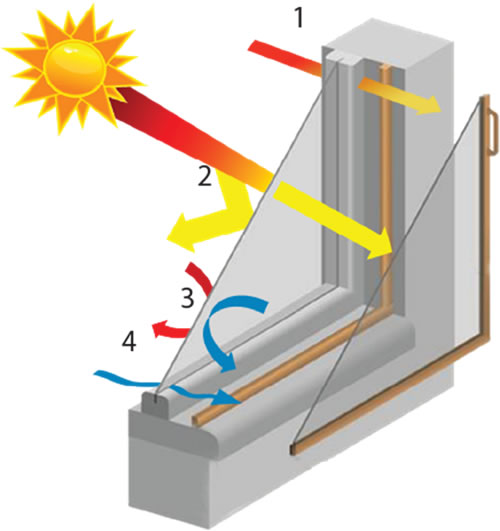
  1. Conduction
    Heat moving through an object (i.e. heat will travel through an aluminium, or steel frame more easily than through a timber or PVC frame).
  2. Radiant heat
    Heat from the direct sun. It can pass through space until reflected or absorbed.
  3. Convection
    Heat flow resulting from air movement e.g. either 'natural' convection - warm air rises, or 'forced' convection - a breeze by a window, both can result in a draught by a window.
  4. Infiltration
    Air leaks around the frame, around the window sash and through the gaps in the movable window parts.

When evaluating your options to improve the thermal performance of your windows, the following double glazing key performance criteria should be considered:

  • U-Value (Uw) represents heat transfer through a window, irrespective of direct sunlight. The lower a window’s U-Value, the better the insulation performance.
  • Solar Heat Gain Coefficient (SHGC) measures the solar energy that passes through glazing. The lower the SHGC, the less solar heat is transmitted through a window.
  • Air Infiltration or leakage measures the rate at which air passes through gaps in window joins and seals. The lower the air infiltration, the better a window’s energy performance.

The Window Energy Rating Scheme (WERS) Thermal Performance

Aluminium Frame Windows

Glazing Type Cooling Stars Heating Stars Cool% Heat% Uw SHGC
Single glazed 3mm clear glass* half blue star red starhalf red star 7.4 0.77
Single glazed 3mm clear glass &
4.5mm Magnetite
blue starblue starhalf blue star red starred starred starred starred starhalf red star 35% 59% 2.9 0.67

Timber Frame Windows

Glazing Type Cooling Stars Heating Stars Cool% Heat% Uw SHGC
Single glazed 3mm clear glass* blue starhalf blue star red starred starred starhalf red star 20% 28% 5.5 0.69
Single glazed 3mm clear glass &
4.5mm Magnetite
blue starblue starhalf blue star red starred starred starred starred starred star 37% 61% 2.6 0.66
Single glazed 3mm clear glass with
Solartite** and 4.5mm Magnetite
blue starblue starblue starblue starblue starblue starhalf blue star red starred starred starred starhalf red star 76% 45% 1.8 0.20


*WERS standard typical industry window
**Solartite is a range of high performance window film. The window tested above has Solartite’s low-e film.


Magnetite vs Traditional Double Glazing – What the experts says

Winter - the ideal situation is to let in as much of the sun's heat and then trap it inside to maintain a comfortable environment in your home or office. This will also significantly reduce heating costs and saves you money. The ideal window for winter will have a high SHGC to let the sun's heat in and a low U-Value to prevent the heat from escaping. Clear windows without shading films are better suited for winter climates.

Compared with traditional double-glazing, Magnetite’s double-glazing solution can provide better results during winter or for cold climate areas such as Canberra, the Adelaide Hills and Blue Mountains.

Magnetite's clear acrylic window panels allow the direct heat from the sun's rays to enter the building and once inside, Magnetite's superior magnetic seals retain the heat, giving Magnetite an advantage over conventional operating windows.

Glazing Type Cooling Stars Heating Stars Cool% Heat% Uw SHGC AI
Double Glazed 3mm clear glass/12mm air
gap/3mm clear glass IGU (Insulated Glass Unit)*
blue starblue starhalf blue star red starred starred starred starred starhalf red star 40% 55% 3.0 0.61 5.0
Single glazed 3mm clear glass &
4.5mm Magnetite
blue starblue starhalf blue star red starred starred starred starred starred star 37% 61% 2.6 0.66 0.5


*WERS standard typical industry window

Summer - the ideal situation is to minimize the heat coming in from outside and prevent the cool air inside from escaping through the window. This will make your home more comfortable and reduce your air-conditioning costs. The ideal window for summer, or for a large west-facing window, will have a low SHGC to limit the heat from the sun's direct rays, as well as, a low U-Value to prevent the heat in the air outside from moving through the window and warming the cool conditioned air inside. It is better to have a shading film on the first (outer) glass pane to limit the heat that enters the double glazed unit.

The combination of Magnetite retrofit double glazing and Solartite outperforms the traditional insulated glass unit for hot climate. Magnetite fit over an existing window with reflective film will give better summer heat control than a double-glazed window with supertoned glass.

The Magnetite system stops the conduction and convection of heat better than glass windows giving superior results for summer conditions. Combined with a film or a shading device, Magnetite is the ideal solution for the hot Australian conditions.

Glazing Type Cooling Stars Heating Stars Cool% Heat% Uw SHGC AI
Double Glazed 5mm Supertoned glass/6mm
air gap/5mm clear glass IGU (Insulated Glass Unit)*
blue starblue starblue starhalf blue star red starred starred starred starhalf red star 54% 425% 3.30 0.461 5.0
Single glazed 3mm glass Solartite**
and 4.5mm Magnetite
blue starblue starblue starblue starblue starhalf blue star red starred starred starred star 73% 38% 2.4 0.19 0.5


*WERS standard typical industry window
**Solartite is a range of high performance window film. The window tested above has Solartite’s low-e film.

Click here to view pdf version of Magnetite WERS test result.

Noise Reduction Technical Data and Results

Proven Results

Noise pollution is one the biggest problems faced in the cities today, particularly in a high-density living. Unwanted noise can be responsible for sleep loss and lack of concentration. This can lead to a deterioration of health through increased stress levels, headaches, high blood pressure and loss of hearing.

Noise penetrates windows through leaky seals or vibrations through the window structure. To reduce noise, a window should minimise air infiltration, hold enough weight to limit vibration and allow a large air cavity. This cavity, or air gap, is the key to secondary glazing.

Expert Advice:

CSIRO Research by John Davy shown an air cavity can effectively enhance sound insulation performance. The larger the air cavity the more noise the window system can reduce. Results show a wide air gap of 100-125mm will improve sound insulation by an average of 7dB(A) more than windows with a narrow gap of 8-13mm.

Window or Glass Door Type Total Glass Thickness (mm) Air Cavity Thickness (mm) Sound Insulation (dB)
Single Glaze 3mm 3 0 23
Single Glaze 6mm 6 0 27
Double Glaze Narrow Gap 9-12 8-13 31
Double Glaze Wide Gap 9-12 100-125 38


The human ear is less sensitive to low frequency sound. According to a study released by the CSIRO, the human ear needs a change of 3dB to detect a difference in noise levels and the human ear perceives a change of 10dB as a doubling or halving of the noise level.

If you double the thickness of glass in a window the noise level will decrease by 3dB the least amount possible to make a difference. If the glass is laminated there is no perceived difference in noise reduction.

National Acoustic Laboratory Testing:

Working with the principles of noise transfer, Magnetite® and Soundtite are designed for high performance, which is achieved by combining air tight seals with the ability to maximize an air cavity and the flexibility to vary glazing thickness to suit. Magnetite® is excellent at reducing general noise such as busy roads, commuter trains and noisy neighbours. Whereas, Soundtite works well to combat low frequencies noise such as garbage truck, freight trains or airplane during take-off and landing.

Test Code Material Tested Rw* Improvement
ATF 707 (test window) Aluminium sliding window, 3mm float glass with mohair seals 23 N/A
ATF 709 Test window, 100mm air gap and Magnetite System (4.5mm acrylic panel) 35 52%
ATF 1507 Test window, 100mm air gap and Magnetite System (10.0mm acrylic panel) 39 70%
ATF 817 Test window, 100mm air gap and Soundtite (6.38mm laminated glass) 41 78%


*The Weighted Sound Reduction Index (Rw) is a measure for sound insulation performance of a single building element such as windows. The higher the Rw rating, the better the sound insulation.