Canberra! Here are 4 Tips for Staying Warm and Cosy this Winter.

Tips for Staying Warm and Cosy this Winter.

Canberra! Here are 4 Tips for Staying Warm and Cosy this Winter.

Are you shivering through your mornings, Canberra? Counting down the minutes until that much-awaited winter sun appears around 9 am? You’re not alone. Canberra is known for its brisk winters, there are numerous ways to stay warm and comfortable throughout the season.

Our team, with a lifetime of Canberra winters between us, has gathered some valuable tips to help you not just endure but actually enjoy the season. Winter isn’t going anywhere soon, so let’s make the most of it. Whether you’re a long-time local or new to the region, these suggestions will help you embrace Canberra’s winter.

Seal Drafts and Insulate to Get Better Thermal Comfort

Begin first by carefully inspecting your home for any drafts or gaps where heat might escape. Seal windows and doors effectively using weather stripping or draft stoppers to block the intrusion of cold air. Additionally, enhancing the insulation in your walls and ceilings is crucial to achieve better thermal comfort.

Research indicates that up to 35 percent of heat is lost through the roof, making roof insulation an excellent solution to manage this issue. While it’s possible to insulate your entire home with a heating system, roof insulation is a cost-effective way to prevent heat loss. Insulation acts as a barrier not only against the cold in winter but also provides temperature control during the warmer months. This investment reduces the need for additional heating or cooling systems, ensuring significant savings on bills, guaranteed thermal comfort, and a reduction in your carbon footprint. It’s a win-win!

Proper insulation not only retains warmth and reduces heating costs but also ensures that your home remains comfortably warm even during Canberra’s coldest nights.

Layer Up Your Home Decor

To create a warm and inviting atmosphere in your home during the colder months, consider layering your decor.

Choose cozy textures like wool, faux fur, and knits. These elements not only enhance the aesthetic appeal of your home but also increase its comfort level, making it perfect to brace the winter chill. Also, hang thick curtains to block out cold drafts and keep your rooms snug. While heavy curtains are perfect for maintaining warmth, thermal ones are even better. The insulating sheet in a thermal curtain or drape, sandwiched between two layers of fabric, helps prevent cold air from seeping through, enabling them to retain heat by limiting airflow between warm and cold spaces in a room. Draw your curtains open when the sun is shining to let in as much natural heat as possible and close them at night to keep the warmth inside longer.

Create Hygge-Inspired Spaces

Adopt the Danish concept of hygge to make your living spaces cosy and inviting. Set up a reading nook with a comfy armchair, soft lighting, and a pile of your favourite books. Use candles to add warmth and ambiance and keep hot cocoa and marshmallows ready for chilly winter evenings.

Dehumidify Your Space

The main issue with Canberra winters isn’t the weather – it’s the poorly insulated houses. Older homes are often built to have single-pane windows that accumulate condensation, posing a problem throughout winter. Dehumidifiers can be incredibly helpful, but a low-tech solution involves using damp-absorbing crystals placed strategically around the house. Check them regularly to ensure they’re effectively reducing excess moisture. However, this is a very temporary solution.

Adopt Double Glazed Window Solutions

Windows significantly influence heat gain and loss, potentially accounting for up to 49% of heat loss in winter and 87% of heat gain in summer.

Magnetite’s retrofit double glazing uses optical grade acrylic, which is up to six times more thermally efficient and significantly stronger than glass. The framing creates a thermal break from your existing frame, while airtight magnetic seals prevent drafts, maintaining comfortable room temperatures all year. These double-glazed windows keep you warm in winter and cool in summer, transforming your standard windows into high-performance, double-glazed systems. Whether your home feels too chilly or too warm, Magnetite offers tailored solutions which will increase thermal comfort in your home.

Magnetite provides three models that you can choose from to suit your home’s needs:

  • Magnetite Classicfeatures removable insulated panels that are ideal for double-hung and timber windows.
  • Magnetite Easyglideis designed to insulate sliding windows.
  • Magnetite Slideris suitable to double-glaze large windows and sliding doors.

Grow Your Winter Comfort with Magnetite

Implementing these tips, along with installing Magnetite’s retrofit double glazing windows system, will ensure you stay warm, cosy, and content throughout Canberra’s winter. By preparing your home, embracing hygge, and focusing on wellness, you can fully enjoy the winter season and make lasting memories.

To find out which double-glazed windows model may best suit your home, get in touch with our Magnetite Canberra team for a free measure & quote to experience the benefits of double-glazed windows and doors yourself.


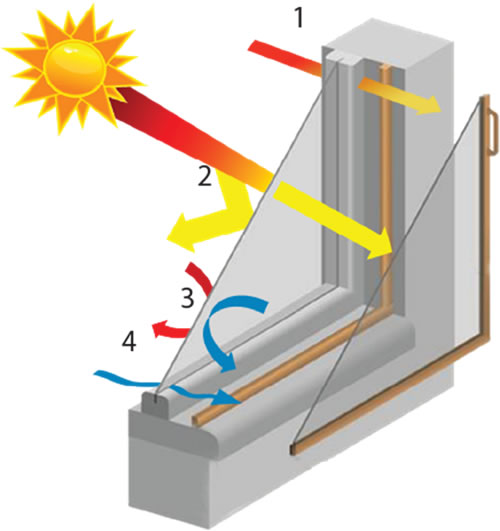
  1. Conduction
    Heat moving through an object (i.e. heat will travel through an aluminium, or steel frame more easily than through a timber or PVC frame).
  2. Radiant heat
    Heat from the direct sun. It can pass through space until reflected or absorbed.
  3. Convection
    Heat flow resulting from air movement e.g. either 'natural' convection - warm air rises, or 'forced' convection - a breeze by a window, both can result in a draught by a window.
  4. Infiltration
    Air leaks around the frame, around the window sash and through the gaps in the movable window parts.

When evaluating your options to improve the thermal performance of your windows, the following double glazing key performance criteria should be considered:

  • U-Value (Uw) represents heat transfer through a window, irrespective of direct sunlight. The lower a window’s U-Value, the better the insulation performance.
  • Solar Heat Gain Coefficient (SHGC) measures the solar energy that passes through glazing. The lower the SHGC, the less solar heat is transmitted through a window.
  • Air Infiltration or leakage measures the rate at which air passes through gaps in window joins and seals. The lower the air infiltration, the better a window’s energy performance.

The Window Energy Rating Scheme (WERS) Thermal Performance

Aluminium Frame Windows

Glazing Type Cooling Stars Heating Stars Cool% Heat% Uw SHGC
Single glazed 3mm clear glass* half blue star red starhalf red star 7.4 0.77
Single glazed 3mm clear glass &
4.5mm Magnetite
blue starblue starhalf blue star red starred starred starred starred starhalf red star 35% 59% 2.9 0.67

Timber Frame Windows

Glazing Type Cooling Stars Heating Stars Cool% Heat% Uw SHGC
Single glazed 3mm clear glass* blue starhalf blue star red starred starred starhalf red star 20% 28% 5.5 0.69
Single glazed 3mm clear glass &
4.5mm Magnetite
blue starblue starhalf blue star red starred starred starred starred starred star 37% 61% 2.6 0.66
Single glazed 3mm clear glass with
Solartite** and 4.5mm Magnetite
blue starblue starblue starblue starblue starblue starhalf blue star red starred starred starred starhalf red star 76% 45% 1.8 0.20


*WERS standard typical industry window
**Solartite is a range of high performance window film. The window tested above has Solartite’s low-e film.


Magnetite vs Traditional Double Glazing – What the experts says

Winter - the ideal situation is to let in as much of the sun's heat and then trap it inside to maintain a comfortable environment in your home or office. This will also significantly reduce heating costs and saves you money. The ideal window for winter will have a high SHGC to let the sun's heat in and a low U-Value to prevent the heat from escaping. Clear windows without shading films are better suited for winter climates.

Compared with traditional double-glazing, Magnetite’s double-glazing solution can provide better results during winter or for cold climate areas such as Canberra, the Adelaide Hills and Blue Mountains.

Magnetite's clear acrylic window panels allow the direct heat from the sun's rays to enter the building and once inside, Magnetite's superior magnetic seals retain the heat, giving Magnetite an advantage over conventional operating windows.

Glazing Type Cooling Stars Heating Stars Cool% Heat% Uw SHGC AI
Double Glazed 3mm clear glass/12mm air
gap/3mm clear glass IGU (Insulated Glass Unit)*
blue starblue starhalf blue star red starred starred starred starred starhalf red star 40% 55% 3.0 0.61 5.0
Single glazed 3mm clear glass &
4.5mm Magnetite
blue starblue starhalf blue star red starred starred starred starred starred star 37% 61% 2.6 0.66 0.5


*WERS standard typical industry window

Summer - the ideal situation is to minimize the heat coming in from outside and prevent the cool air inside from escaping through the window. This will make your home more comfortable and reduce your air-conditioning costs. The ideal window for summer, or for a large west-facing window, will have a low SHGC to limit the heat from the sun's direct rays, as well as, a low U-Value to prevent the heat in the air outside from moving through the window and warming the cool conditioned air inside. It is better to have a shading film on the first (outer) glass pane to limit the heat that enters the double glazed unit.

The combination of Magnetite retrofit double glazing and Solartite outperforms the traditional insulated glass unit for hot climate. Magnetite fit over an existing window with reflective film will give better summer heat control than a double-glazed window with supertoned glass.

The Magnetite system stops the conduction and convection of heat better than glass windows giving superior results for summer conditions. Combined with a film or a shading device, Magnetite is the ideal solution for the hot Australian conditions.

Glazing Type Cooling Stars Heating Stars Cool% Heat% Uw SHGC AI
Double Glazed 5mm Supertoned glass/6mm
air gap/5mm clear glass IGU (Insulated Glass Unit)*
blue starblue starblue starhalf blue star red starred starred starred starhalf red star 54% 425% 3.30 0.461 5.0
Single glazed 3mm glass Solartite**
and 4.5mm Magnetite
blue starblue starblue starblue starblue starhalf blue star red starred starred starred star 73% 38% 2.4 0.19 0.5


*WERS standard typical industry window
**Solartite is a range of high performance window film. The window tested above has Solartite’s low-e film.

Click here to view pdf version of Magnetite WERS test result.

Noise Reduction Technical Data and Results

Proven Results

Noise pollution is one the biggest problems faced in the cities today, particularly in a high-density living. Unwanted noise can be responsible for sleep loss and lack of concentration. This can lead to a deterioration of health through increased stress levels, headaches, high blood pressure and loss of hearing.

Noise penetrates windows through leaky seals or vibrations through the window structure. To reduce noise, a window should minimise air infiltration, hold enough weight to limit vibration and allow a large air cavity. This cavity, or air gap, is the key to secondary glazing.

Expert Advice:

CSIRO Research by John Davy shown an air cavity can effectively enhance sound insulation performance. The larger the air cavity the more noise the window system can reduce. Results show a wide air gap of 100-125mm will improve sound insulation by an average of 7dB(A) more than windows with a narrow gap of 8-13mm.

Window or Glass Door Type Total Glass Thickness (mm) Air Cavity Thickness (mm) Sound Insulation (dB)
Single Glaze 3mm 3 0 23
Single Glaze 6mm 6 0 27
Double Glaze Narrow Gap 9-12 8-13 31
Double Glaze Wide Gap 9-12 100-125 38


The human ear is less sensitive to low frequency sound. According to a study released by the CSIRO, the human ear needs a change of 3dB to detect a difference in noise levels and the human ear perceives a change of 10dB as a doubling or halving of the noise level.

If you double the thickness of glass in a window the noise level will decrease by 3dB the least amount possible to make a difference. If the glass is laminated there is no perceived difference in noise reduction.

National Acoustic Laboratory Testing:

Working with the principles of noise transfer, Magnetite® and Soundtite are designed for high performance, which is achieved by combining air tight seals with the ability to maximize an air cavity and the flexibility to vary glazing thickness to suit. Magnetite® is excellent at reducing general noise such as busy roads, commuter trains and noisy neighbours. Whereas, Soundtite works well to combat low frequencies noise such as garbage truck, freight trains or airplane during take-off and landing.

Test Code Material Tested Rw* Improvement
ATF 707 (test window) Aluminium sliding window, 3mm float glass with mohair seals 23 N/A
ATF 709 Test window, 100mm air gap and Magnetite System (4.5mm acrylic panel) 35 52%
ATF 1507 Test window, 100mm air gap and Magnetite System (10.0mm acrylic panel) 39 70%
ATF 817 Test window, 100mm air gap and Soundtite (6.38mm laminated glass) 41 78%


*The Weighted Sound Reduction Index (Rw) is a measure for sound insulation performance of a single building element such as windows. The higher the Rw rating, the better the sound insulation.