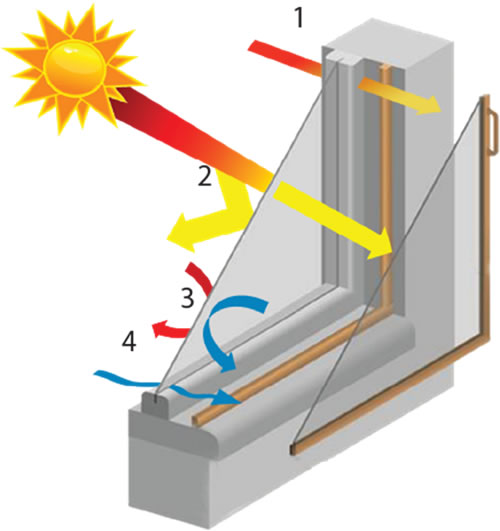
Sound penetrates windows through leaky seals or vibrations through the window structure. To reduce noise, a window should minimise air infiltration, hold enough weight to limit vibration and allow a large air cavity. This cavity, or air gap, is the key to secondary glazing.
Acoustic tests produce a rating for a particular material. The Building Code of Australia (BCA) uses an Rw scale to measure external noise entering buildings. The higher the Rw number, the better the structure is at reducing noise.
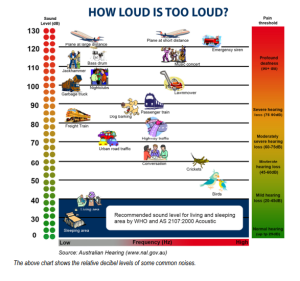
The human ear is less sensitive to low frequency sound. As such noise meter readings are often adjusted to account for the perception of sound by applying an A-weighting dB (A) and measured in decibel units (dB). Improvements in the sound rating of a building material (or “corrections”) can be applied to account for particular frequencies. The most common correction is Rw+Ctr which corrects for low frequencies.
To measure performance, it is important to look at the whole window, including frames, seals and glazing. Often, performance of fixed glass panels will decrease when inserted into an operational window, due to leaks in the framing. The type of frame also has a bearing in that a light weight, hollow frame will not perform as well as a heavier, solid frame.
While it is important to understand that the rating of a window will affect the noise performance of a room, the rating of other building elements must also be considered when looking at overall building performance. (e.g. walls, floors and ceilings)
Working with the principles of noise transfer, Magnetite and Soundtite are designed for high performance, which is achieved by combining air tight seals with the ability to maximize an air cavity and the flexibility to vary glazing thickness to suit.