How to Reduce Noise at Home in Canberra: 4 Practical Upgrades That Work

How to Reduce Noise at Home in Canberra: 4 Practical Upgrades That Work

Canberra wears a lot of hats: it’s a garden city, a growing city and (increasingly) a busy city. Between new builds in Gungahlin and Molonglo, the light rail hum, flight paths near the airport, weekend hospitality in Braddon and Kingston and the everyday rumble of arterials like Northbourne Avenue, many homes are dealing with more noise than they’d like. Add Canberra’s crisp winters (where closed windows amplify indoor echoes) and the case for better sound control becomes pretty clear.

The good news: you don’t need a full renovation to reclaim the quiet. Below are four proven, step-by-step upgrades, ranging from quick décor tweaks to high-impact window improvements that suit Canberra’s homes, from heritage terraces to modern apartments.

1) Soften Hard Surfaces to Tame Echo and Reverberation

Why it matters:
Noise inside your home doesn’t just arrive from outside; it also bounces around. Hard surfaces such as timber floors, tiles, plaster walls, big windows all reflect sound, making rooms feel “shouty” even at normal conversation levels. The fix is simple: add soft, porous materials that absorb sound waves.

What to do (fast wins):

  • Rugs + underlay: Lay dense rugs in living rooms, hallways and bedrooms. A quality acoustic underlay can make a bigger difference than rug thickness alone.
  • Curtains you can feel: Swap light sheers for lined heavier drapes or layered curtains. In summer and winter, they double as thermal buffers on those extreme temperature days.
  • Soft furnishings: Pile in cushions, upholstered furniture and fabric wall hangings. Bookshelves filled with books also break up reflections.
  • Acoustic art or panels (optional): For home offices or media rooms, add two or three discreet acoustic panels. Think of them as “hidden” microphones placed where your voice would hit a wall.

2) Use Furniture as Sound Shields

Why it matters:
You can often block or redirect noise with smarter room layouts, no tools required.

What to do:

  • Buffer walls: Place full bookshelves, wardrobes, or tall cabinetry on the wall that faces the street or a noisy neighbour. The mass helps absorb and dampen sound.
  • Bed placement: In street-facing bedrooms, move the bedhead away from the external wall if possible. Even shifting 30–60 cm can reduce perceived noise.
  • Zoning: In open-plan spaces, arrange high-back sofas or room dividers to create “quiet pockets” for reading, work or study.
  • Door sweeps: Add door seals on internal doors (bedrooms, studies) to reduce sound transfer between zones.

3) Seal Gaps Where Sound Sneaks In

Why it matters:
Noise loves a shortcut. Tiny gaps around window sashes, sliding doors and architraves act like miniature loudspeakers. Sealing them reduces both sound and winter draughts (a double win in Canberra).

What to do:

  • Target the leaks: On a windy day, run your hand around frames and sills to feel for air movement. That’s also where noise slips in.
  • Install quality weather seals: Compression or brush seals around operable parts (hinged and sliding windows/doors) can dramatically cut leaks.
  • Don’t forget the little things: Keyholes, pet doors, downlight penetrations, exhaust vents, if air moves, sound moves. Add covers or dampers where practical.

Where Magnetite helps:
Our Sealtite weather and acoustic seals are designed to pair with existing windows and doors (including heritage sashes), tightening up gaps while preserving function and appearance.

4) Upgrade the Weakest Link: Windows (Retrofit Double Glazing)

Why it matters:
Windows are usually the thinnest part of the building envelope. Single glazing transmits sound easily and loses internal temperature quickly – two problems that show up constantly in the ACT.

Retrofit double glazing adds a custom secondary panel to your existing window on the room side, creating an insulating air cavity. This setup:

  • Reduces external noise by up to 70% (depending on window type and installation)
  • Improves thermal performance, keeping rooms warmer on frosty mornings and reducing condensation
  • Avoids replacement – ideal for heritage façades, strata rules or where you want minimal disruption

How it compares to replacement double glazing:

  • Disruption & cost: Retrofitting is typically faster and more economical than ripping out frames – no brickwork or repainting.
  • Compatibility: Works with timber, aluminium, steel and heritage sash windows.
  • Performance: The decoupled air gap and different material properties (e.g., optical-grade acrylic panel) are excellent for both sound and heat control.

Where Magnetite helps:
Our retrofit system is custom-measured and installed over existing windows and doors. Paired with Sealtite seals, you’ll get a step-change in quiet and comfort without changing the look of your home.

Canberra-Specific Tips & Considerations

Construction cycles:
If you’re near an active development corridor (e.g., Gungahlin, Molonglo, parts of the inner north), assume daytime noise for months. Tackle windows first, then add soft treatments.

Heritage and streetscape controls:
Many established suburbs value original façades. Retrofit solutions respect exterior character while upgrading performance from the inside.

Winter realities:
Closed windows trap sound reflections indoors and make leaks feel colder. Sealing plus retrofit glazing addresses both comfort and calm.

What Kind of Results Can You Expect?

While every home is different, Canberra homeowners typically report:

  • Quieter interiors: Traffic, aircraft, and late-night chatter become background rather than foreground.
  • Better sleep: Especially in street-facing bedrooms or near light rail/frequent bus routes.
  • Lower heating/cooling needs: Rooms stay warm or colder longer after the heater or air conditioner cycles off.
  • A calmer “feel”: Once echoes are tamed and leaks sealed, the whole house feels more settled.

A Simple Plan to Get Started

This weekend

  1. Add a dense rug and lined curtains to your noisiest room.
  2. Re-arrange furniture to buffer the street-facing wall.
  3. Install adhesive door sweeps on bedroom and study doors.

This month

  1. Seal obvious gaps around windows and sliding doors.
  2. Shortlist rooms that suffer most (bedrooms first, then living/office).
  3. Get an assessment for retrofit double glazing and sealing – prioritise the noisiest or coldest windows.

This year

  1. Complete retrofit glazing in stages as budget allows.
  2. Add selective acoustic panels in a home office or media room if needed.

You can’t control Canberra’s growth or the noise that comes with it but you can control how your home responds. Start with soft furnishings and smart layouts to reduce indoor echo. Seal the leaks to cut both noise and winter draughts. Then address the biggest win of all: windows. Retrofit double glazing is the practical, heritage-friendly way to make your home quieter, warmer, and more comfortable without the cost and chaos of full replacement.


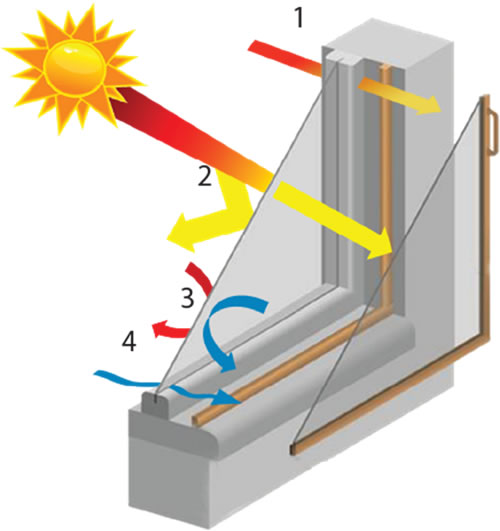
  1. Conduction
    Heat moving through an object (i.e. heat will travel through an aluminium, or steel frame more easily than through a timber or PVC frame).
  2. Radiant heat
    Heat from the direct sun. It can pass through space until reflected or absorbed.
  3. Convection
    Heat flow resulting from air movement e.g. either 'natural' convection - warm air rises, or 'forced' convection - a breeze by a window, both can result in a draught by a window.
  4. Infiltration
    Air leaks around the frame, around the window sash and through the gaps in the movable window parts.

When evaluating your options to improve the thermal performance of your windows, the following double glazing key performance criteria should be considered:

  • U-Value (Uw) represents heat transfer through a window, irrespective of direct sunlight. The lower a window’s U-Value, the better the insulation performance.
  • Solar Heat Gain Coefficient (SHGC) measures the solar energy that passes through glazing. The lower the SHGC, the less solar heat is transmitted through a window.
  • Air Infiltration or leakage measures the rate at which air passes through gaps in window joins and seals. The lower the air infiltration, the better a window’s energy performance.

The Window Energy Rating Scheme (WERS) Thermal Performance

Aluminium Frame Windows

Glazing Type Cooling Stars Heating Stars Cool% Heat% Uw SHGC
Single glazed 3mm clear glass* half blue star red starhalf red star 7.4 0.77
Single glazed 3mm clear glass &
4.5mm Magnetite
blue starblue starhalf blue star red starred starred starred starred starhalf red star 35% 59% 2.9 0.67

Timber Frame Windows

Glazing Type Cooling Stars Heating Stars Cool% Heat% Uw SHGC
Single glazed 3mm clear glass* blue starhalf blue star red starred starred starhalf red star 20% 28% 5.5 0.69
Single glazed 3mm clear glass &
4.5mm Magnetite
blue starblue starhalf blue star red starred starred starred starred starred star 37% 61% 2.6 0.66
Single glazed 3mm clear glass with
Solartite** and 4.5mm Magnetite
blue starblue starblue starblue starblue starblue starhalf blue star red starred starred starred starhalf red star 76% 45% 1.8 0.20


*WERS standard typical industry window
**Solartite is a range of high performance window film. The window tested above has Solartite’s low-e film.


Magnetite vs Traditional Double Glazing – What the experts says

Winter - the ideal situation is to let in as much of the sun's heat and then trap it inside to maintain a comfortable environment in your home or office. This will also significantly reduce heating costs and saves you money. The ideal window for winter will have a high SHGC to let the sun's heat in and a low U-Value to prevent the heat from escaping. Clear windows without shading films are better suited for winter climates.

Compared with traditional double-glazing, Magnetite’s double-glazing solution can provide better results during winter or for cold climate areas such as Canberra, the Adelaide Hills and Blue Mountains.

Magnetite's clear acrylic window panels allow the direct heat from the sun's rays to enter the building and once inside, Magnetite's superior magnetic seals retain the heat, giving Magnetite an advantage over conventional operating windows.

Glazing Type Cooling Stars Heating Stars Cool% Heat% Uw SHGC AI
Double Glazed 3mm clear glass/12mm air
gap/3mm clear glass IGU (Insulated Glass Unit)*
blue starblue starhalf blue star red starred starred starred starred starhalf red star 40% 55% 3.0 0.61 5.0
Single glazed 3mm clear glass &
4.5mm Magnetite
blue starblue starhalf blue star red starred starred starred starred starred star 37% 61% 2.6 0.66 0.5


*WERS standard typical industry window

Summer - the ideal situation is to minimize the heat coming in from outside and prevent the cool air inside from escaping through the window. This will make your home more comfortable and reduce your air-conditioning costs. The ideal window for summer, or for a large west-facing window, will have a low SHGC to limit the heat from the sun's direct rays, as well as, a low U-Value to prevent the heat in the air outside from moving through the window and warming the cool conditioned air inside. It is better to have a shading film on the first (outer) glass pane to limit the heat that enters the double glazed unit.

The combination of Magnetite retrofit double glazing and Solartite outperforms the traditional insulated glass unit for hot climate. Magnetite fit over an existing window with reflective film will give better summer heat control than a double-glazed window with supertoned glass.

The Magnetite system stops the conduction and convection of heat better than glass windows giving superior results for summer conditions. Combined with a film or a shading device, Magnetite is the ideal solution for the hot Australian conditions.

Glazing Type Cooling Stars Heating Stars Cool% Heat% Uw SHGC AI
Double Glazed 5mm Supertoned glass/6mm
air gap/5mm clear glass IGU (Insulated Glass Unit)*
blue starblue starblue starhalf blue star red starred starred starred starhalf red star 54% 425% 3.30 0.461 5.0
Single glazed 3mm glass Solartite**
and 4.5mm Magnetite
blue starblue starblue starblue starblue starhalf blue star red starred starred starred star 73% 38% 2.4 0.19 0.5


*WERS standard typical industry window
**Solartite is a range of high performance window film. The window tested above has Solartite’s low-e film.

Click here to view pdf version of Magnetite WERS test result.

Noise Reduction Technical Data and Results

Proven Results

Noise pollution is one the biggest problems faced in the cities today, particularly in a high-density living. Unwanted noise can be responsible for sleep loss and lack of concentration. This can lead to a deterioration of health through increased stress levels, headaches, high blood pressure and loss of hearing.

Noise penetrates windows through leaky seals or vibrations through the window structure. To reduce noise, a window should minimise air infiltration, hold enough weight to limit vibration and allow a large air cavity. This cavity, or air gap, is the key to secondary glazing.

Expert Advice:

CSIRO Research by John Davy shown an air cavity can effectively enhance sound insulation performance. The larger the air cavity the more noise the window system can reduce. Results show a wide air gap of 100-125mm will improve sound insulation by an average of 7dB(A) more than windows with a narrow gap of 8-13mm.

Window or Glass Door Type Total Glass Thickness (mm) Air Cavity Thickness (mm) Sound Insulation (dB)
Single Glaze 3mm 3 0 23
Single Glaze 6mm 6 0 27
Double Glaze Narrow Gap 9-12 8-13 31
Double Glaze Wide Gap 9-12 100-125 38


The human ear is less sensitive to low frequency sound. According to a study released by the CSIRO, the human ear needs a change of 3dB to detect a difference in noise levels and the human ear perceives a change of 10dB as a doubling or halving of the noise level.

If you double the thickness of glass in a window the noise level will decrease by 3dB the least amount possible to make a difference. If the glass is laminated there is no perceived difference in noise reduction.

National Acoustic Laboratory Testing:

Working with the principles of noise transfer, Magnetite® and Soundtite are designed for high performance, which is achieved by combining air tight seals with the ability to maximize an air cavity and the flexibility to vary glazing thickness to suit. Magnetite® is excellent at reducing general noise such as busy roads, commuter trains and noisy neighbours. Whereas, Soundtite works well to combat low frequencies noise such as garbage truck, freight trains or airplane during take-off and landing.

Test Code Material Tested Rw* Improvement
ATF 707 (test window) Aluminium sliding window, 3mm float glass with mohair seals 23 N/A
ATF 709 Test window, 100mm air gap and Magnetite System (4.5mm acrylic panel) 35 52%
ATF 1507 Test window, 100mm air gap and Magnetite System (10.0mm acrylic panel) 39 70%
ATF 817 Test window, 100mm air gap and Soundtite (6.38mm laminated glass) 41 78%


*The Weighted Sound Reduction Index (Rw) is a measure for sound insulation performance of a single building element such as windows. The higher the Rw rating, the better the sound insulation.